Mostrando entradas con la etiqueta China. Mostrar todas las entradas

miércoles, 20 de febrero de 2019

Singapore: the ‘prosperity salad’

Singapore may be known for glittering skyscrapers, glossy designer shops and hosting power meetings with international leaders, but the island nation’s success could be due to another tour de force altogether.
The country has a secret weapon: a salad. For each Chinese New Year, chefs throughout Singapore create a raw-fish salad that when tossed is said to guarantee prosperity. You’ll find them bowed over their chopping boards, slicing and dicing an array of flavourful ingredients, each of which embodies its own special power and meaning.

Yu sheng, a raw-fish salad served during Chinese New Year, is said to guarantee prosperity when tossed (Credit: Credit: Alexlky/Getty Images)
Yu sheng, a raw-fish salad served during Chinese New Year, is said to guarantee prosperity when tossed (Credit: Alexlky/Getty Images)

The origin of the dish, called yu sheng (which plays on the sign for ‘yu’ that means both ‘fish’ and ‘abundance’, and ‘sheng’, which can mean ‘raw’ or ‘life’), is one of legend. With its roots in ancient China, the dish is said to have been invented by a young couple who survived on fish and vinegar when they were trapped during a storm; while others say that yu sheng was created by fishermen in China’s Guangzhou province who would eat their catch to celebrate ‘Human Day’ – the birth of man – on the seventh day of the Chinese New Year.

When the dish was brought to Singapore by Chinese immigrants in the 1930s, it looked very little like the ‘prosperity salad’ that’s tossed today. Back then the simple street food was sold from hawker carts and served either Jiangmen-style, a small salad of raw fish, shredded ginger, lettuce strips and spring onion that the customer seasoned with salt, sugar and vinegar; or Teochew-style, where the customer would wrap a piece of grass carp in a lettuce leaf. Both versions were available throughout the year, but were most often ordered by people on Human Day since the Chinese symbol for ‘fish’ also represents ‘abundance’, so it’s seen as a lucky food for mankind.
It remained that way until 1964, when four Singaporean chefs created a recipe that would become the focal point of every Singaporean Chinese New Year celebration. These chefs are held in such high esteem that they are known as the ‘Four Heavenly Kings’ of Singaporean cuisine: Lau Yoke Pui, Tham Yui Kai, Hooi Kok Wai and Sin Leong. Lau and Tham have since sadly passed away, but Sin, 91, and Hooi, 79, can still be found every day working at their bustling Red Star Restaurant near River Valley, which they have co-owned for the past 45 years.

Legend says yu sheng was invented by a couple who survived on fish and vinegar while trapped during a storm (Credit: Credit: Kuchinta/Getty Images)
Yu sheng’s roots are in ancient China, where legend says it was invented by a couple who survived on fish and vinegar while trapped during a storm (Credit: Kuchinta/Getty Images)

As I walked through the glass doors into the much-loved restaurant, I was greeted by an army of aunties pushing steaming dim sum carts between the legions of round tables. Serving breakfast, lunch and dinner to a room that seats 900, it’s clear that both chefs have a good head for business. And that was their reason, they say, for creating yu sheng. They needed a celebration dish that would help boost their takings for Chinese New Year as many people would eat at home during the festivities and restaurants would be quiet.
The Chinese New Year festivities, which last for 15 days, run from January to February depending on the lunar calendar. The focus of any New Year is the Reunion Dinner, held on Chinese New Year’s Eve – the night before the first day of Chinese New Year – when family members would return home and traditionally dine on steamboat (hot pot), waxed duck and Chinese sausage. However, the Four Heavenly Kings were ready to change that.
It’s seen as a lucky food for mankind
The chefs had worked together as apprentices at the famed (and now-closed) Cathay Restaurant in Singapore. After leaving, they each launched their own culinary careers and became partners in each other’s businesses. They would meet regularly to brainstorm new recipes, and the festive yu sheng was the result of one of these gatherings.
To find inspiration for their festive dish, the chefs decided to look at what was traditionally eaten at New Year and was seen as lucky. That meant the dish needed to include raw fish due to its association with good fortune. And the chefs loved the idea of creating a celebration dish from one of their favourite street-food meals. On the street you would mix the yu sheng yourself, but the chefs saw an opportunity to create a more colourful, flavoursome and luxurious version that families could mix together.

Singaporean chefs Hooi Kok Wai, Tham Yui Kai, Sin Leong and Lau Yoke Pui created the version of yu sheng eaten today (Credit: Credit: Dragon Phoenix Restaurant)
Singaporean chefs Hooi Kok Wai, Tham Yui Kai, Sin Leong and Lau Yoke Pui created the version of yu sheng eaten today (Credit: Dragon Phoenix Restaurant)

Working with the idea that fish represented abundance, Sin said they started to build up the rest of the dish with other ingredients in the same vein. The finished dish, which was set upon a large, circular serving platter, featured orange, pepper, salmon, vegetable oil, plum sauce, crackers and crushed peanuts – many of which are homonyms, with their Chinese sign having a lucky double meaning in the Chinese language. Each ingredient was placed in a separate small pile around the edge of the plate to give the customers the chance to mix the salad. It made the perfect celebratory centrepiece to any dining table.
It didn’t take long to come up with this initial idea, Hooi said, but it took them years to perfect the dish. The new yu sheng was first launched at the chefs’ Lai Wah Restaurant in 1964 and then rolled out to their other restaurants.
It made the perfect celebratory centrepiece to any dining table
But from the moment they placed the celebratory platter in front of diners, the dish was literally taken to the next level. As each of the Chinese restaurants featured round tables – to squeeze on more people and allow easier access to the shared dishes – the only way diners could reach the dish was to stand. When they stood, they immediately felt ready to celebrate and started to toss the salad with their chopsticks with gusto.
Because the chefs had chosen ingredients with lucky meanings, guests started to recite a blessing as they added each one. With the fish they would say ‘nian nian you yu’ (‘abundance throughout the year’); when pouring the oil they’d repeat ‘cai yuan guang jin’ (‘numerous sources of wealth’). ‘Tian tian mi mi’ (‘sweet and loving relationships’) was for the plum sauce, while pepper was announced with ‘zhao cai jin bao’ (‘attract wealth and treasures’). Finally, the crackers, which were said to represent pillows of gold, had the exclamation ‘man di huang jin’ (‘may your home be filled with gold’).

The sign for each ingredient in yu sheng has a lucky double meaning in the Chinese language (Credit: Credit: coleong/Getty Images)
The sign for each ingredient in yu sheng has a lucky double meaning in the Chinese language (Credit: coleong/Getty Images)

The foodie-loving Singaporeans soon fell in love with yu sheng and started to host yu sheng dinners, where they would invite groups of friends or colleagues to toss the celebratory dish with them during the festive season. It wasn’t long before yu sheng started to be sold at other restaurants across the island.
As the increase in yu sheng dinners grew, so did the size of the dish and the rituals. More ingredients were added so larger groups of diners could enjoy the dish. And then, in the 1970s, giant chopsticks, which were usually used to cook noodles in the kitchen, started to appear on the dining table to help the guests toss their oversized salad.
Exuberant diners swore that the higher they tossed the salad, the more luck it would attract. So the festive yu sheng received a new name of ‘lo hei’, which means ‘tossing up’ good fortune.

It is believed that the higher the yu sheng is tossed, the more luck it attracts (Credit: Credit: ThamKC/Getty Images)
It is believed that the higher the yu sheng is tossed, the more luck it attracts (Credit: ThamKC/Getty Images)

Today, Singaporeans still join together to toss the lo hei, and still embrace the same rituals. After gathering around the table, they will greet each other with the phrase ‘gong xi fa cai’ (which means ‘congratulations for your wealth’), then one member of the family will start to combine the ingredients. As each ingredient is added, they will say its phrase out loud and then the guests will repeat it, before they toss the salad seven times in unison.
When I spoke to the two Heavenly Kings, they were surprised and delighted that their dish has become such an important part of the Chinese New Year festivities, and were thrilled other chefs have taken it forward.
You eat with your eyes, then your nose and finally your mouth
However, when I told them that a version of this former street food dish sold last year for S$999, they seemed somewhat amazed, as their own dish in Red Star costs just S$80. But when they saw a photograph of a Pekingese dog sculpted out of salad ingredients (that included edible gold leaf and champagne jelly) by executive chef Leong Chee Yeng of the Jade restaurant at the Fullerton Hotel, Sin nodded in appreciation. “It’s beautiful. You eat with your eyes, then your nose and finally your mouth,” he said.
Later that week I asked Leong how he feels about reinventing such a legendary Singaporean dish. “Yu sheng is commonly reinterpreted in several ways, but I ensure that when I create a new interpretation, the original components of yu sheng are retained,” he said, explaining that it still features the raw shredded vegetables – which he used to create the shape of dog’s body – and also references the golden crackers, except his ingredient is gold leaf. Luckily for us, he also creates more traditional versions using salmon and raw carrot, starting from S$78 for two to five people.

Restaurants around Singapore have made lo hei their own, using the ingredients to sculpt symbols of the Chinese New Year (Credit: Credit: Jade, The Fullerton Hotel Singapore)
Restaurants around Singapore have made lo hei their own, using the ingredients to sculpt symbols of the Chinese New Year (Credit: Jade, The Fullerton Hotel Singapore)

But no matter how lo hei is served, there’s no denying its popularity. And maybe the greatest acknowledgment of how successful Singapore’s lo hei has become is that it can now be found at Reunion Dinners in Hong Kong and even parts of Greater China, which was the home of the original street dish.
Hooi’s son, Chris Hooi, who now runs the Dragon Phoenix restaurant, told why me he thinks it’s proved so successful. “The dish is an ice-breaker. It is interactive and creates a platform for people to exchange well wishes during the Lunar New Year. The tossing is the fun part – but we encourage people to keep the tossing within the plate so they don’t waste those tasty ingredients.”
Fuente: http://www.bbc.com/travel/story/20190218-singapores-salad-that-makes-you-rich

domingo, 16 de octubre de 2016

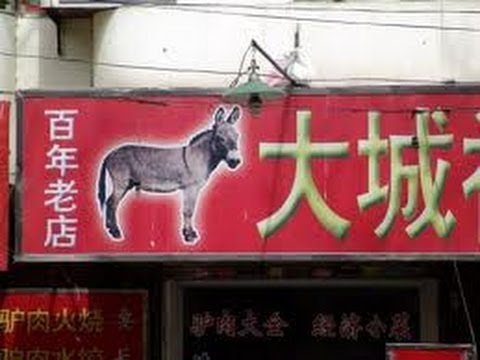
China importa burros!!!


Resultado de imagen para china burroBueno para la circulación sanguínea, para la menstruación irregular, para la anemia, el insomnio o el mareo. Para numerosas dolencias, la medicina tradicional china recomienda encarecidamente el ejiao, un alimento que considera tan virtuoso como el ginseng. Pero hay un problema: el preciado ejiao se fabrica con gelatina de piel de burro, y la demanda china de estos animales se está haciendo insostenible. Varios países africanos han prohibido la exportación de sus pollinos, ante una escalada de las ventas hacia Asia que amenazaba con diezmar sus rebaños.
El mes pasado fue Níger, después de que sus exportaciones de burros se multiplicaran por tres en un año; Burkina Faso lo decidió en agosto. Según explicó su director de Sanidad Pública, a la agencia AFP, su población de 1,4 millones de jumentos estaba siendo “sobreexplotada” por la demanda de pieles en Asia.
El apetito no se ha dirigido solo a África. Las cifras de la agencia de Aduanas del puerto de Qingdao, uno de los mayores de China, indican que la entrada de pieles de burro creció casi un 150% entre 2013 y 2015, de 9,32 toneladas a 22,44 toneladas. México, Perú y Egipto se encontraban entre los principales países de procedencia. En España, donde quedan muy pocos ejemplares de burro, "no hay constancia de que se estén vendiendo", según Dilfenio Romero, presidente de la Asociación de Amigos del Burro.
Cada año, China produce cerca de 5.000 toneladas de ejiao, algo que requiere, según los cálculos de la principal fabricante de esta gelatina, Shandong Donge Ejiao, cerca de 4 millones de pieles. De cada piel se puede obtener entre 1,5 y 2,5 kilos de la gelatina. Pero la producción local china solo llega a los 1,8 millones de pieles.

Déficit de burros en el país

La propia población de burros chinos ha ido cayendo un 3,5% anual desde la década de los 90. Hoy día, la segunda economía del mundo, habitada por 1.370 millones de personas, apenas cuenta con una población de entre 4 y 5 millones de burros, frente a los 11 millones que llegó a tener hace un cuarto de siglo, según el Anuario Estadístico de la Ganadería china. La gran mayoría de ellos, un 97%, se cría en unas pocas áreas del norte de China.
“El burro es difícil de criar, su periodo de crecimiento es largo y no es fácil criarlos a gran escala”, ha apuntado a los medios oficiales chinos Bu Xun, director del Centro de Biotecnología de la Academia de Ciencias Agrícolas de Shandong, una provincia en el noreste de China donde se concentra la mayor parte de estos animales en el país y, no es una coincidencia, la mayor producción de “ejiao”.
Sun Yujiang, profesor de la Universidad de Agricultura de Qingdao y secretario general de la Unión de Estrategia e Innovación Tecnológica de la Industria del Burro, señala también entre las razones para el declive la mecanización de la agricultura y la falta de subsidios oficiales para la cría de estos animales, que sí existe para otras especies, como el cerdo o la vaca.
Esa falta de incentivos puede cambiar, no obstante. El desequilibrio entre la oferta y la demanda hace que el precio se haya disparado y crezca cerca de un 23% anual, apunta Bu. Un alza que ha repercutido en el precio del “ejiao”. Según la Asociación de Productores de Eijao en Shandong, en 2010 una piel de burro costaba menos de 500 yuanes (unos 75 euros), mientras que hoy día sobrepasa los 2.600 yuanes (300 euros).

También un alimento habitual

“Tanto los precios del ejiao como de la propia carne de burro —un alimento común, especialmente en regiones del norte de China, donde unos pastelillos hechos con esa carne se consideran una especialidad— están subiendo. La industria está estudiando nuevos productos como la leche de burra o la sangre de burro. Se está convirtiendo en un sector prometedor, y por ello el Gobierno ha empezado a prestarle más atención, con subsidios para las grandes granjas que críen más de un millar de burros, así que posiblemente veamos un aumento de esta industria y de la población de burros para 2020”, considera el profesor Sun.
Mientras tanto, los altos precios han disparado las falsificaciones. A comienzos de este año, la agencia oficial Xinhua informaba de que “la gente ha empezado a usar las pieles de mulas, caballos, cerdos o bueyes para producir medicamentos falsos”. Todo un anatema para los fabricantes, según Sun: “Es imposible sustituir la gelatina de burro por la de cualquier otro animal: algunos de los nutrientes que contiene solo se encuentran en su piel”.
Fuente: http://economia.elpais.com/economia/2016/10/06/actualidad/1475775231_389146.html

sábado, 3 de septiembre de 2016

After office a lo chino

Resultado de imagen para china after office
Históricamente en China a raíz de su excedente de mano de obra barata en muchas industrias podían darse el lujo de tener tiempos muertos o de inactividad. Pero en el sector tecnológico e informático actual es muy diferente.
La actividad laboral es frenética y el nuevo personal contratado se ve obligado a extender su horario laboral para poder cumplir plazos.
Dai Xiang de 40 años de edad comenzó su carrera como ingeniero en una empresa metalúrgica y llegó a trabajar turnos de 72 horas. Luego de 15 años trabajando en relación de dependencia con un ritmo que le obligaba a dormir muchas veces en el suelo o sobre su escritorio, Dai Xiang fundó su propia empresa el año pasado.
Una de las primeras órdenes en su nuevo negocio fue la instalación de camas en un rincón apartado de la oficina. "Para la tecnología, que es más bien una actividad cerebral, los trabajadores necesitan tiempo para encontrar inspiración", dijo Dai. "Nuestra zona de descanso no es sólo para dormir por la noche, al mediodía también está bien."
"El ritmo de crecimiento de las empresas chinas de Internet es extremadamente rápido. Estuve recientemente en los EE.UU. y el entorno competitivo no es tan intenso como en China", dijo Cui Meng, director general y cofundador de la compañía de datos Goopal.
"Los programadores de la empresa, en particular, trabajan horas extras todos los días", dijo. "Se les permite dormir en la hora del almuerzo y después de las 21 ya sea en su escritorio, en un sofá o una silla". En formas más extremas, algunos empleados de la empresa de alta tecnología viven en la oficina durante la semana de trabajo.
Liu Zhanyu en Dou Mi You Pin, una plataforma de reclutamiento y recursos humanos, una sala de conferencias se convierte de lunes a viernes en un dormitorio para evitar los desplazamientos diarios de más de una hora a su casa en los suburbios de Pekín.
"Tenemos que levantarnos a las 8.30 porque todos nuestros compañeros de trabajo vienen a las 9.30 y nos lavamos en el mismo cuarto de baño que todo el mundo utiliza", dijo Liu.
Mientras que muchos trabajadores consideran que esta forma de trabajo les resulta rentable, advierten que tiene un alto costo social. "Mi hijo me extraña; llego a casa y él se abalanza sobre mí como un lobo pequeño", dijo Liu, al hablar de su hijo de tres años, a quien sólo ve los fines de semana. "Eso me hace sentir un poco culpable".
El programador Xiang Shiyang, de 28 años, trabaja hasta las 3 o 4 al menos dos veces a la semana en una empresa de gestión de créditos, que utiliza grandes volúmenes de datos para ayudar a las empresas a gestionar el riesgo financiero, dejando poco espacio para socializar fuera del trabajo. "No tengo muchas oportunidades o mucho tiempo para encontrar una novia", confió.

lunes, 22 de agosto de 2016

Curiosidades Nro.19: EL puente de cristal más largo del mundo en China


China abrió este sábado al público el puente de cristal más alto y largo del mundo, de 430 metros de longitud y a 300 de altura, en el espectacular parque natural de Zhangjiajie, lugar que inspiró las Montañas Aleluya de la película Avatar.

Diseñado por el arquitecto israelí Haim Dotan, el puente de seis metros de ancho une dos acantilados de la montaña Tianmen ("Puerta del Cielo") a través de 99 paneles con tres capas de cristal, y está preparado para que sobre él circulen hasta 800 personas a la vez.

Los constructores probaron su resistencia recientemente, al hacer circular sobre él un camión de dos toneladas, e incluso se pidió a varias personas que golpearan su suelo con martillos y toda la fuerza posible, también con el fin de mostrar su dureza.

La obra, que ha costado 22.500 millones de yuanes (unos 3.400 millones de dólares), finalizó el pasado mayo, cinco meses después de lo previsto debido a las intensas lluvias caídas en la zona.

Con este puente la provincia central de Hunan, muy visitada por turistas chinos al ser la tierra natal de Mao Zedong, busca con este proyecto aumentar el número de viajeros a una de sus mayores joyas naturales, el parque de Zhangjiajie.

La bella mezcla de formas kársticas -más de 3.000 columnas pétreas lo pueblan- con el verdor de los bosques subtropicales mereció ser declarado Patrimonio de la Humanidad por la Unesco en 1992 e inspiró a James Cameron para idear las montañas que en la película "Avatar" tienen idéntico aspecto, aunque en ese caso flotan en las nubes desafiando las leyes de la física.

Caminar por el puente transparente puede ser la forma más parecida a "flotar" sobre esas montañas, tal y como se aprecia en la película, una experiencia no apta para personas con vértigo.

Un lugar que los responsables de turismo, con el afán de ir más allá, planean ofrecer para hacer "puenting".

El puente de Zhangjiajie no es la primera estructura de cristal que se edifica en China, donde este tipo de atracciones se han hecho muy populares.

Ya existen cerca de una decena en zonas montañosas en un país donde cada provincia compite por atraer los cientos de millones de turistas internos que se mueven cada año por la geografía nacional.

Dos de ellas se encuentran también en la Montaña Tianmen, aunque no son puentes sino pasarelas adosadas a acantilados: el llamado "Camino de la Fe", abierto en 2011, y el "Dragón Enroscado", a 1.500 metros de altura e inaugurado a principios de este mes.

A las afueras de Pekín se abrió el pasado primero de mayo un mirador acristalado que sobresale 32 metros de un monte, situado a 400 metros de altura y ofrece una espectacular vista.

Otra pasarela sobre un acantilado está en los montes Yuntai de la provincia central de Henan, pero fue clausurada poco después de su inauguración, en septiembre de 2015, al descubrirse grietas en el cristal -al parecer causadas por objetos arrojados por turistas- lo que causó cierto pánico.

Estas estructuras no sólo se circunscriben a zonas naturales de China. En julio pasado se abrió en la Torre Jinmao, uno de los rascacielos más altos de Shanghái, otra pasarela de cristal desde la que los visitantes pueden caminar por el exterior del edificio en su último piso, el número 88.
Fuente: http://www.canarias7.es/articulo.cfm?id=432007